

Inventory Leakage: The Silent Killer of Warehouse Accuracy in India
Most Indian brands processing 50–100+ orders per day lose 3–7% of their inventory every quarter — quietly, without any theft involved.Founders usually notice it only when:
- Stockouts increase
- Dispatch accuracy falls
- Marketplaces penalize delays
- Returns spike
- Margins shrink
- Cash flow tightens
Inventory accuracy isn’t a backend metric anymore.
It directly determines your growth ceiling, customer experience, and profitability.
1. Wrong Inward Quantity: The First and Biggest Leak
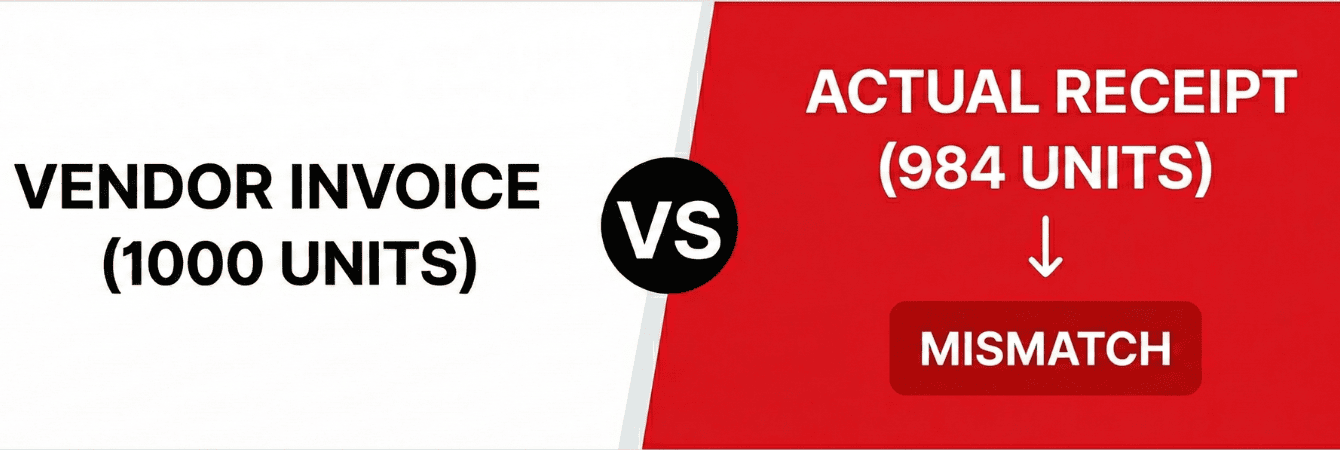
Most inventory errors begin at inbound.
Your purchase order may say 1,000 units, but the warehouse may receive 984.If this mismatch isn't caught immediately, you start with incorrect stock — and every downstream process inherits that error.Common Causes:
- Manual GRN counting during peak hours
- Short-delivered supplier consignments
- Mixed cartons with assorted SKUs
- No line-by-line inward validation
- Temporary staff handling inbound
How to Fix This:
- Validate inward quantity before updating stock
- Use barcode scans during receiving
- Standardize a GRN checklist
- Reconcile invoice vs physical quantity instantly
Accurate inward = accurate inventory.
2. Mis-Slotting and Mixed Bins — The Accuracy Killer

Mis-slotting is one of the biggest accuracy killers in Indian warehouses.When SKU A and SKU B share a bin, the WMS shows one story while the physical rack shows another.A typical example:
- System shows: SKU A = 200 units
- Shelf shows: SKU A = 183 units
(With stray pieces of SKU B mixed in)Why This Happens
- No strict “one bin = one SKU” rule
- Fast-moving products stored randomly
- Replenishment done without scanning
- Seasonal or rotating staff
- Inconsistent rack labeling
Operational Impact
- Wrong picks
- QC failures
- Higher returns and complaints
- Slow picking routes
- Packing delays
How to Fix Slotting
- Enforce one SKU per bin
- Label bin, rack, and aisle locations clearly
- Use location scanning
- Separate fast movers (A-category) into dedicated zones
Slotting discipline is the backbone of warehouse management in India.
2. Mis-Slotting and Mixed Bins — The Accuracy Killer
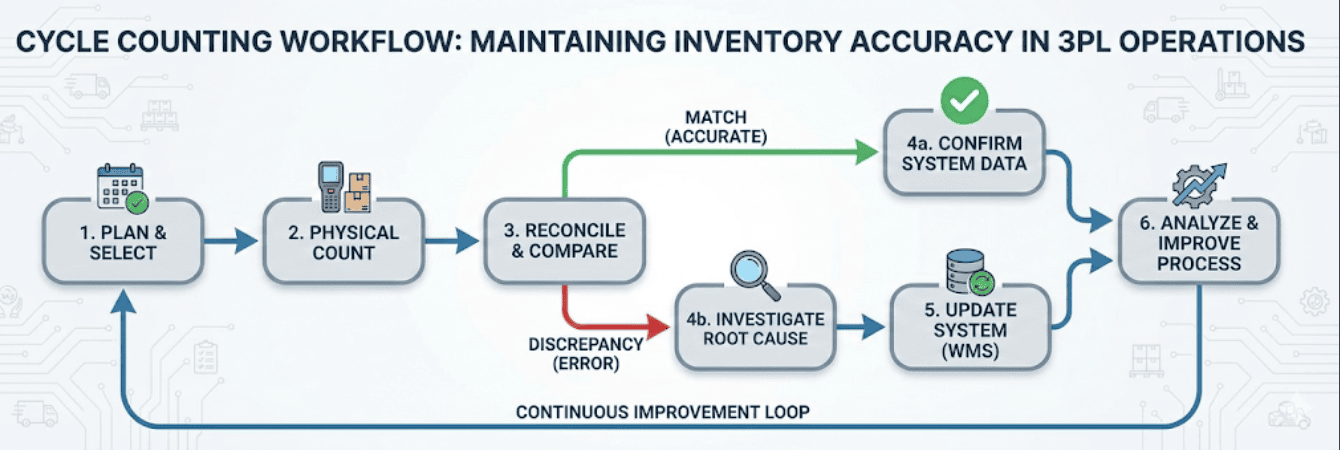
Many Indian brands still rely on monthly or quarterly physical counts.But in a warehouse shipping 50–100 orders per day, discrepancies build daily.By the time month-end comes, errors compound into large variances.Brands that skip weekly cycle counts never cross 95–96% accuracy, no matter which WMS they use.Recommended Cycle Count Frequency
- A-category (fast movers): weekly
- B-category: every 2 weeks
- C-category: monthly
Why Weekly Cycle Counts Matter
- Prevent long-term shrinkage
- Catch mis-slotting early
- Fix inward errors quickly
- Maintain marketplace SLAs
- Reduce customer complaints
A cycle count program is the cheapest and highest ROI operational improvement for D2C and retail brands.
The Financial Impact: Small Errors → Big Losses
A brand holding ₹1 crore of inventory may lose ₹3–7 lakhs per quarter from:
- Stock variance
- Wrong dispatches
- Overselling
- RTO due to wrong items sent
- Inability to fulfill marketplace orders
- Lost Buy Box (Amazon/Flipkart)
- Blocked working capital
Improving inventory accuracy gives you faster financial returns than marketing, discounting, or hiring more manpower.
How to Fix Inventory Leakage — Starting Today
Use this 5-step plan to immediately improve accuracy:
1. Audit your inward process
Validate physical quantity before updating GRN.
2. Enforce strict bin discipline
No mixed bins. No exceptions.
3. Implement weekly cycle counts
Start with your A-movers.
4. Reduce staff rotation
Leakage spikes when untrained staff handle inbound or replenishment.
5. Use a WMS that enforces scanning
Your system must enforce discipline, not rely on memory.
These changes can raise accuracy from 85–90% → 96–99% in 2–4 weeks.
Final Word
Inventory leakage does not announce itself.
It quietly erodes your margins, slows your growth, and damages customer trust.
Once you fix inward, slotting, and cycle counts, inventory accuracy becomes consistent — and scaling becomes predictable instead of chaotic.
Run a cycle count this week.
Your inventory is lying to you.