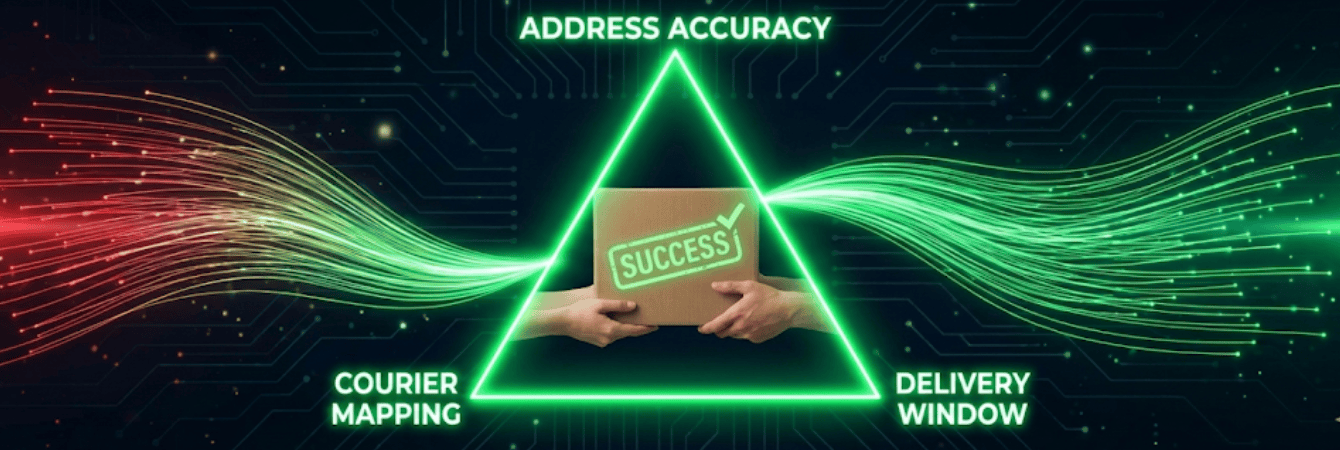
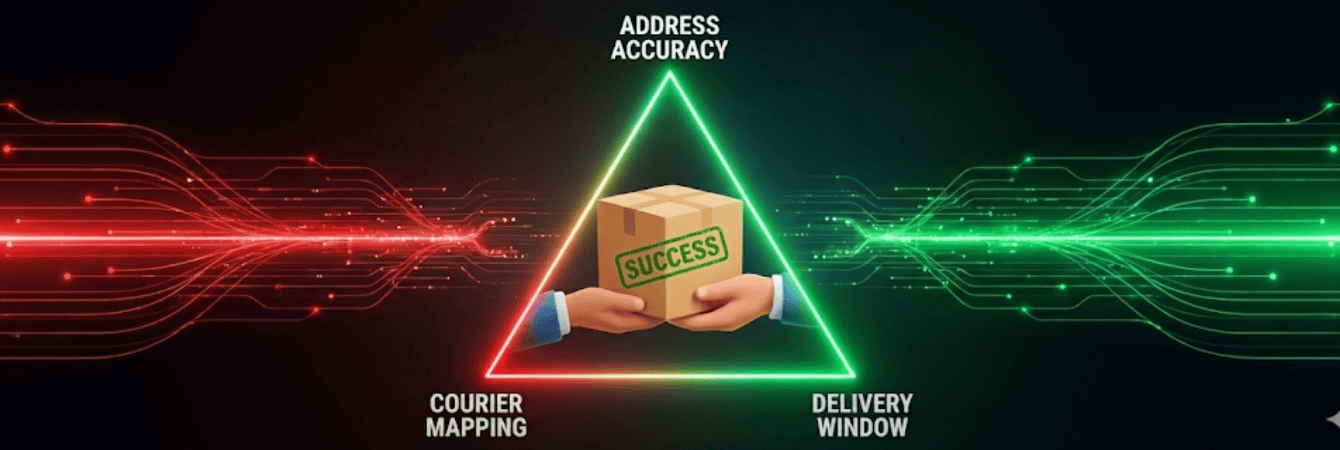
Return-to-Origin (RTO) is not caused by “customer refusal.”For Indian D2C brands processing 50–100 orders per day, RTO is the result of three operational failures that work together like a geometric triangle:
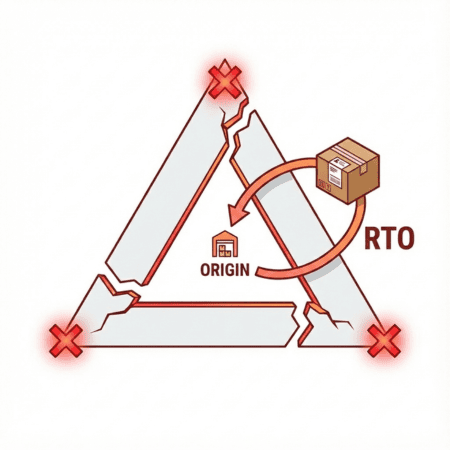
- Address accuracy issues
- Wrong courier–pin code mapping
- Delivery timing that does not match customer availability
If even one angle breaks, the entire delivery collapses.
RTO increases aggressively in Tier 2, Tier 3, COD-heavy orders, festival seasons, and remote pin codes.
Most importantly: 20–35% of preventable RTO comes from these three failures — not customer behavior.
The RTO Triangle Explained
1. Address Accuracy — The Foundation Most Brands Ignore
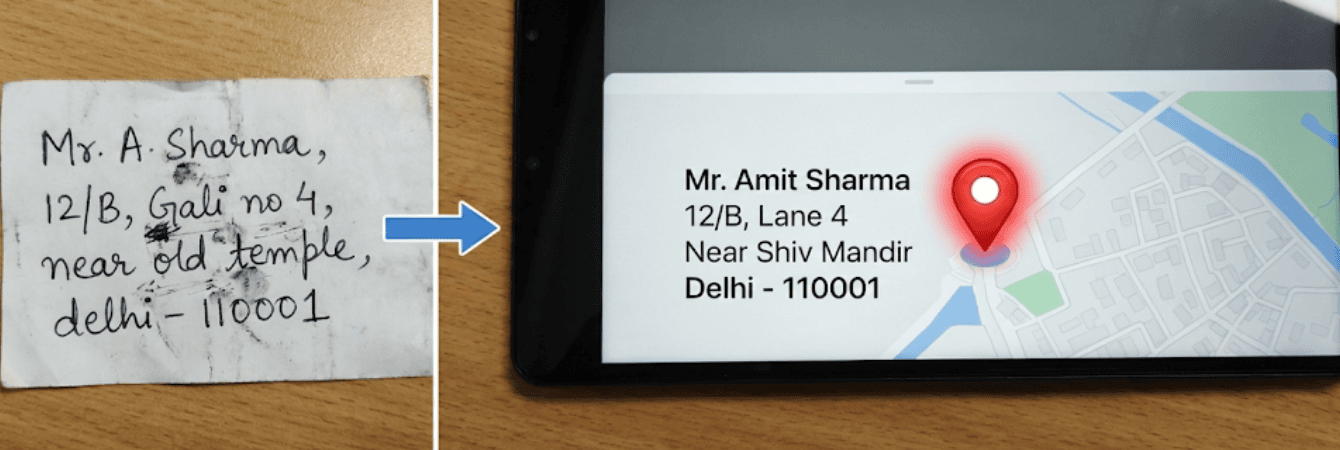
Most D2C brands validate addresses only at checkout, but mid-scale brands face deeper issues:
- Landmark-only or incomplete addresses common in Tier 2/3
- Apartment blocks with inconsistent door numbering
- Locality names differing from postal divisions
- Multi-language input fields that courier systems cannot parse
These lead to blind delivery attempts → first-attempt failure → RTO initiation.Address Accuracy FixesThese are mid-scale operational upgrades—not beginner-level tips:
AI-assisted address correction + GPS validation
Mandatory nearest-road / landmark confirmation
IVR address confirmation for first-time COD customers
Standardizing multi-language address data before OMS push
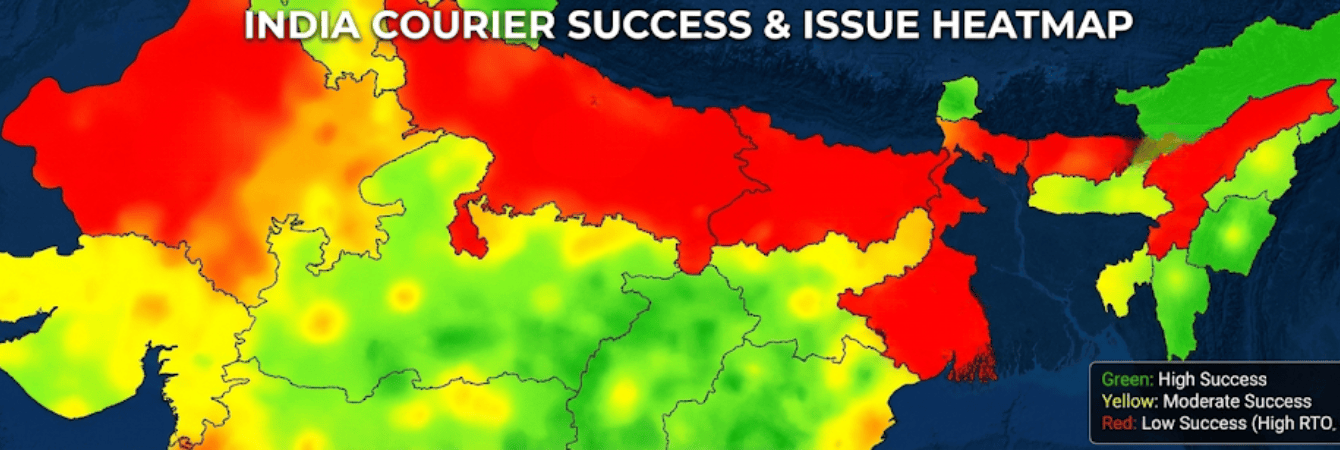
2. Courier Mapping by Pincode — The Silent RTO Killer
Brands often choose couriers based on price instead of actual pincode performance.But courier success varies every week and every region.Common failures:
- Using one courier for all COD deliveries
- Not tracking weekly service success at pin code level
- Ignoring courier congestion during festivals
- Using fast couriers where slow-but-reliable performs better
Wrong courier = late attempt = customer not available = RTO.Courier Mapping Fixes
- Weekly benchmarking of courier success rate by pin code clusters
- COD routing rules: automatically switch courier below 70% success
- Festival-mode mapping (reliable-first routing)
- SLA-based courier selection rather than cheapest-rate routing
3. Delivery Window vs Customer Availability — The Most Underestimated Driver
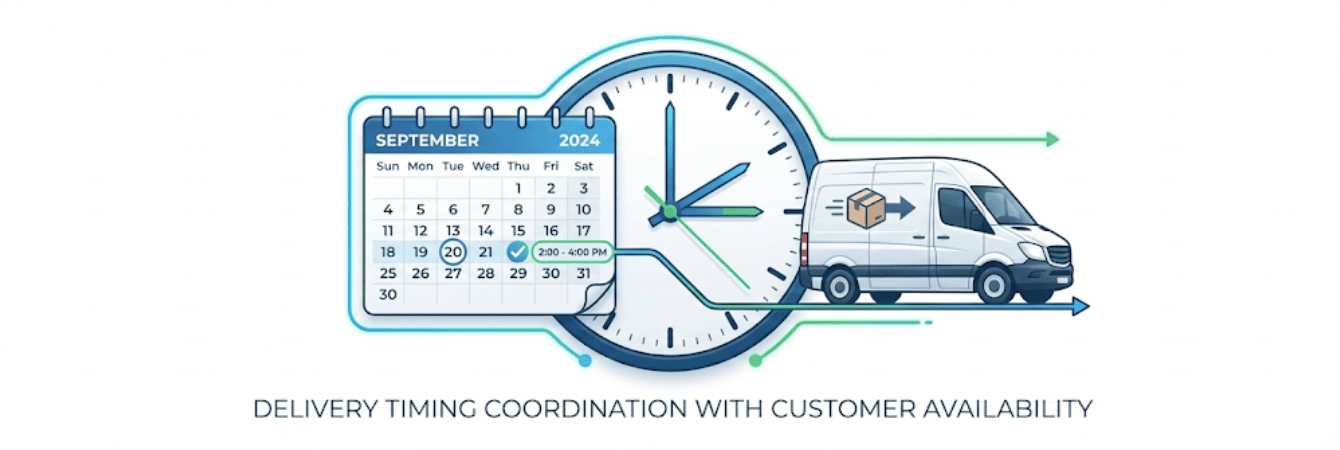
Most “customer refused” orders are actually customer-not-available issues.Patterns seen across India:
- Morning attempts fail as Tier 2/3 customers leave early for work
- COD customers expect a confirmation call before delivery
- Festival season travel patterns cause inconsistent availability
- Hostels/PGs and gated apartments allow deliveries only at certain hours
Delivery Window Fixes
- Predictive ETA + WhatsApp/SMS delivery window alerts
- Preferred delivery slot selection for repeat buyers
- Routing based on historical “time-of-day success”
- OTP confirmation before dispatch for risky COD clusters
Who Suffers the Most?
The brands most affected by preventable RTO are:
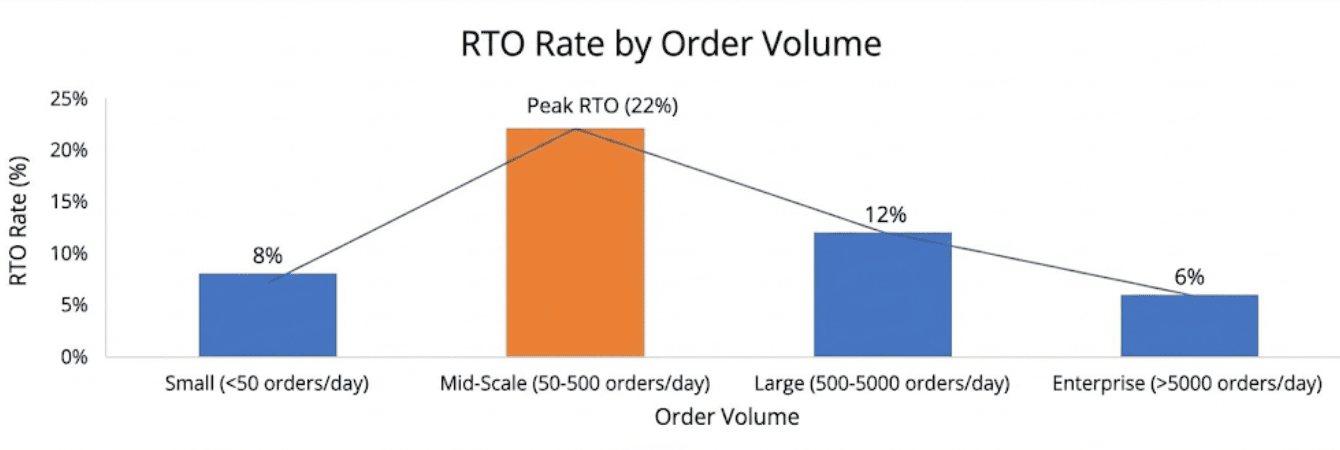
- Shipping 50–100 orders/day
- High COD order share
- Strong reliance on Tier 2/3 customer base
- Limited access to deep analytics or courier behavior insights
These brands experience 20–35% preventable margin loss simply due to the RTO triangle.
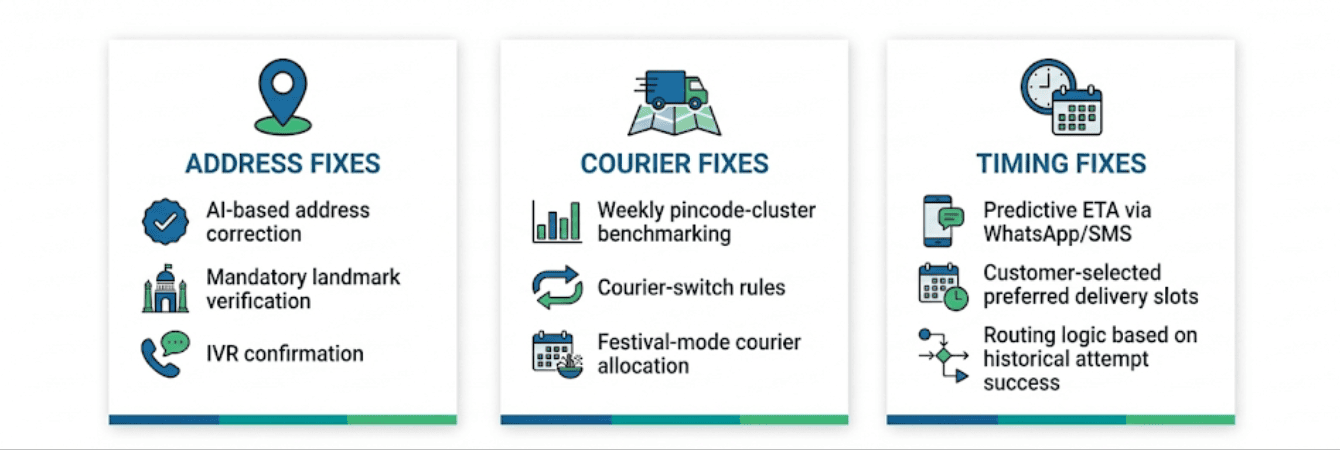
A Practical Fix Framework
Step 1 — Address Intelligence Layer
- Auto-correct + geo-validate address
- Mandatory landmark verification
- IVR confirm for first-time COD buyers confirm for first-time COD buyers
Step 2 — Smart Courier Routing
- Weekly courier benchmarking
- Dynamic switching logic
- Separate routing rules for prepaid vs COD
Step 3 — Delivery Window Alignment
- Predictive ETA notifications
- Time-slot selection for repeat buyers
- Courier allocation based on time-of-day success rates
Conclusion
RTO is not caused by customers refusing packages.
RTO is an operational triangle failure.
Fix the three angles — address accuracy, courier selection, delivery-window alignment — and D2C brands reduce preventable RTO faster than any marketing or pricing optimization.